Erendiz Journal · People & Landscape
The next hold is closer than you think.
About Florian’s passion for climbing, the crags around Kemer and an idea that begins with good questions. Between Geyikbayırı and Olympos, we want to bring together people who see more in this landscape.
Erendiz Editorial Team · Research from 10 October 2026 · approx. 12 minutes
Go to the practical climbing guide ↗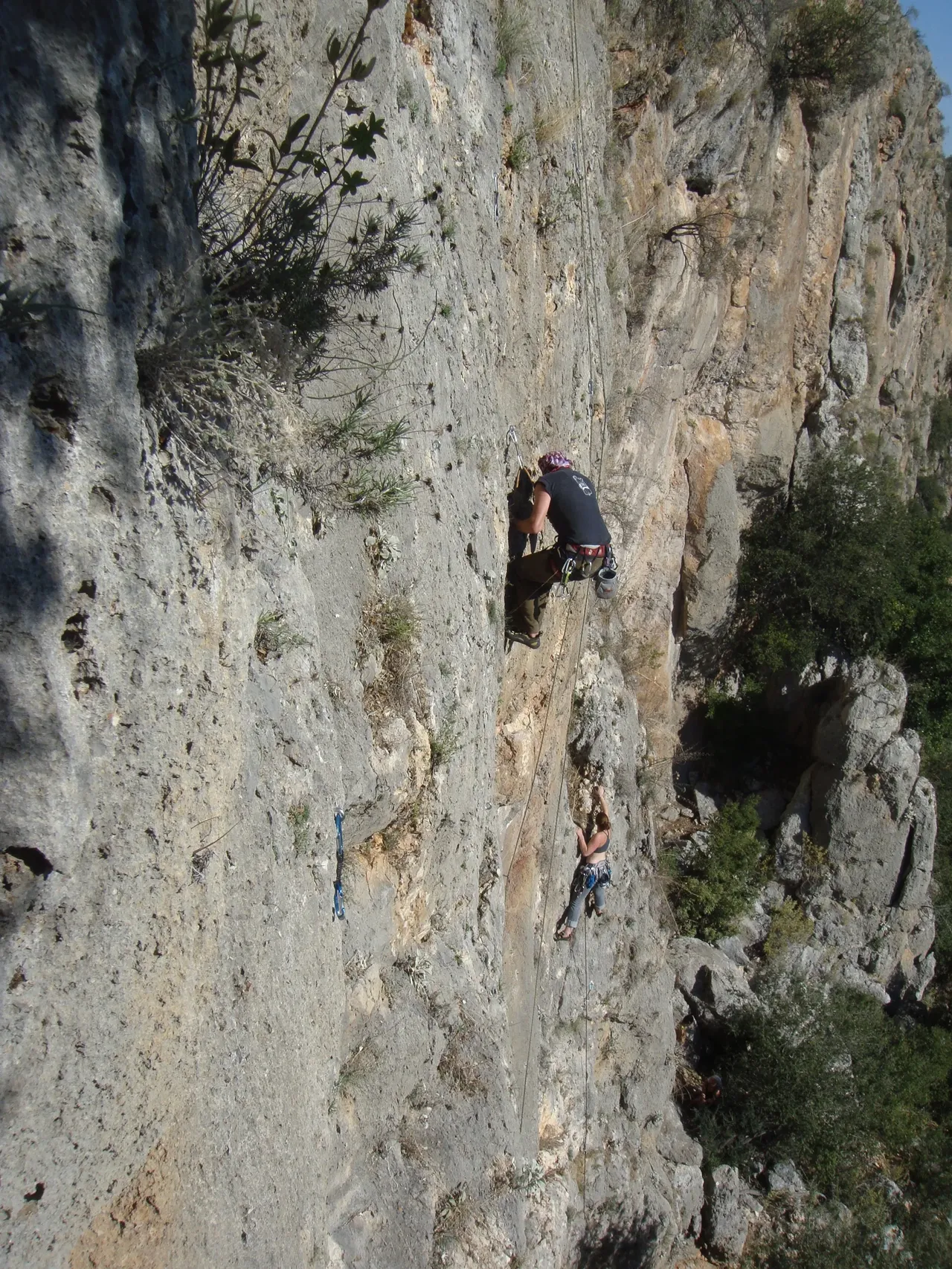
Florian’s connection to the rock
Anyone who first thinks of beach and sea when they hear Kemer is right to do so. Yet the mountains rise so close behind the coast that your gaze almost naturally turns upwards. For Florian, this is more than a beautiful view: he is a passionate climber himself and used to run beginner courses. The pleasure of understanding a movement and gradually feeling your way onto the rock is part of his own story.
We would like to make this experience more visible again at Erendiz. It is about creating a place where climbers can get talking, find their bearings in the region and plan a stay that suits them. Florian’s former courses are part of this personal background. They do not automatically mean that a bookable course programme is available today; instruction and guiding must be arranged specifically with a suitable provider.
Erendiz has evolved over the years. We bought the land in 1984 and opened in 1986. Over time, Erendiz Ranch, with its 16 horses, became the garden hotel. Around the year 2000, we changed direction as the neighbourhood became more built up. Our connection to the landscape remained. Climbing fits this story: heading out, getting to know a place, and returning to the garden in the evening.
Kemer as a base
Geyikbayırı near Antalya and Olympos south of Kemer are among the region’s well-known climbing destinations. Kemer lies in the coastal area between them. This opens up an appealing kind of holiday: discovering different areas while keeping the same base. It also means travelling to the crags. If you want to walk to the same sector every morning, you will plan differently from someone who wants to combine climbing with the sea, excursions and a stay at a garden hotel.
In our view, Kemer’s advantage is its mix. Some fellow travellers want to head to the crag, while others would rather hike, swim or visit an ancient city. One shared place to stay can bring these wishes together. The key is to plan the days realistically: a more distant area takes a full day, a rest day remains unplanned, and a local tip only becomes a specific outing after consultation.
This is why our area guide does not promise fixed journey times or a daily shuttle. Planning depends on the actual sector, traffic, road access and approach. Bus services along the coast can help you get your bearings, but they do not always replace the final journey to the crag. Our bus guide complements your travel planning, while the exact journey to climb is clarified separately.
Karataş and the Saxon route developers
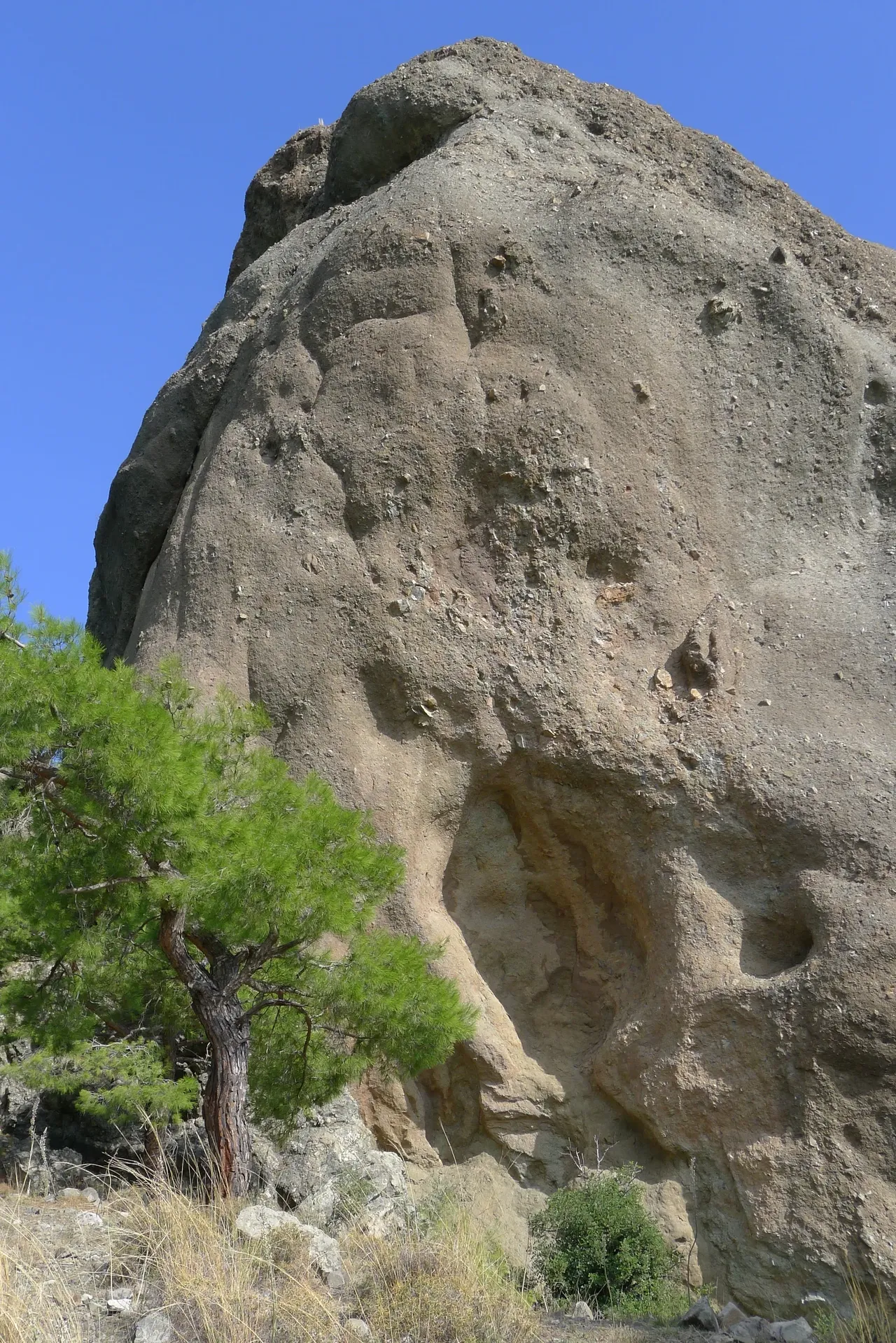
Karataş has a documented climbing history. Helmut Paul’s digitised small climbing guide and the route list updated in March 2001 describe seven summits with numerous lines. These include Bayrak, Küçük and Büyük Karakule, Küçük and Büyük Karataş, Korsan and Para Torba. This provides a far more concrete basis than the brief tourist descriptions of the striking rocks between Kemer and Çamyuva.
A contemporary report by Karlheinz Bardoux, published in the June 2000 bulletin of the Saxon Mountaineering Association, names Helmut Paul and Manfred Vogel as the most active route developers at that time. This is where the link to the Saxon climbing scene can be found. The report describes first-hand ascents and existing bolts. It would therefore be wrong to portray Karataş broadly as an area protected exclusively by traditional gear.
The route list includes, for example, the Ostwand on Bayrak at UIAA IV+ and 35 metres; the Schwarze Rampe on Büyük Karataş at UIAA III+ and 110 metres over four pitches; and its Südostpfeiler at UIAA V and 155 metres over six pitches. These are historical guidebook details. They show the variety that has already been developed here, but do not indicate the current condition of bolts, abseil points or access.
We now also have photographed pages from a printed Karataş chapter. They distinguish ten sectors: alongside the major towers are smaller crags such as Aydıntepe, Kara Blok and Taşbaba. The numbering runs up to 65, but includes projects and variations. It should therefore not be read as the number of routes currently available to climb. The sectors and selected examples now complement our practical climbing guide.
The book pages also show how important comparison is. For Leichten Weg at Korsan, the table gives 5a, while the drawn line gives 5b. Other entries also differ between the image and the table. The book’s title, edition and year of publication are still unknown. We list this information separately from the 2001 directory and make the differences visible, rather than deriving seemingly unambiguous grades from them.
For us, meaningful further development therefore begins with this existing history: recognising first ascensionists, compiling topos and later additions, and checking the information with people who know the area. On our climbing page, we make the historical directory easy to read. We will add route lines to photos only when the rock, direction of view and line can be identified unequivocally. A convincing drawing alone would be no help on the rock.
Sources: Helmut Paul: Karataş climbing guide, digitised manuscript · Karataş: route list, as of March 2001 · Karlheinz Bardoux: Climbing in Turkey, SBB June 2000
Çalıştepe and Beycik
Çalıştepe can also be described more specifically. Alongside the presentation by local operator Engin Türker, the Lezec climbing database lists individual routes in the Club Med, Gym sector, Lycian, Left Cave, Right Cave and Lighthouse sectors. These include Lycian Way L1 at French 5b, Precious at 5c, and the route named after Helmut Paul at 7b. This confirms published route listings, but does not replace checking conditions on site.
The database also illustrates why we treat figures carefully: the totals in its descriptive text do not fully match the sector and route entries displayed below. We therefore use selected information that can be clearly attributed and link to the source. On his own website, Engin Türker describes new routes at Çalıştepe. For an initiative in Kemer, this is a good reason to first get to know and involve existing local work.
Beycik adds another perspective on the inland area. The regional specialist overview describes limestone crags with shadier aspects and predominantly easy to mid-grade sport routes. Its specific suitability nevertheless depends on the sector and current conditions. For a varied trip, it is worth keeping Beycik on the list alongside the big names.
Sources: Climbing Kemer: Engin Türker and Çalıştepe · Lezec: Çalış Tepe / Kemer with individual route entries · Climb Europe: overview of regional climbing guides
Putting the canyons in context
When researching Kemer, you quickly come across the word canyon. It can refer to very different places and activities. Kesme Boğazı lies inland near Kuzdere, while Göynük is further north. Both belong in a good overview of the region. Treating them as interchangeable climbing areas, however, would create more confusion than guidance.
Kesme Boğazı is described as a nature and outdoor destination. In the public sources we checked, we could not verify a current, reliable list of freely accessible bolted sport climbing routes. This is an open research question, not a judgement on whether climbing takes place there. Anyone who knows a sector, a topo or the route developers can help close this gap.
A historical trace goes further back: in 2000, Karlheinz Bardoux reported climbing an approximately 100-metre limestone pillar at the northern end of a wall of Güzel Katran above what he called the Climax Gorge. This is a specific climbing account from the hinterland. Whether this line can be assigned to a sector commonly used today still needs to be clarified on site or by consulting further guidebooks.
At Göynük Canyon, activities such as body rafting, canyoning and ziplining are documented directly by the operator. This makes it an interesting addition to an active holiday. However, it is a different proposition from rope climbing on a sport route. The tourist canyon route should not be equated with an independent technical canyon descent either. Access, weather and water conditions should always be confirmed as part of current arrangements.
Sources: Life Kemer: Nature activities · Göynük Canyon: operator’s offering · Kemer District Office: Göynük Canyon · Karlheinz Bardoux: Climbing in Turkey, SBB June 2000
A climbing day in Geyikbayırı
For many climbing travellers, Geyikbayırı is the first name they associate with Antalya. The JoSiTo Camp there describes more than a thousand routes of varying grades and styles. Even more important than this scale for holiday planning is the established infrastructure of camps, local contacts and people who look after the area.
From Erendiz, this becomes a day trip with travel time deliberately built into the plan. It is especially well suited if you would like to get to know different places. For a stay devoted exclusively to a project in Geyikbayırı, accommodation right by the rock may be more practical. We want to make the right trip possible for you and present the distances honestly.
There is something Kemer can learn from this: a climbing scene does not emerge through new lines alone. People stay longer and return when they find reliable information, can exchange ideas and see that the area is cared for. This everyday work is less spectacular than a photo on an overhang, but it supports a large part of the quality.
Sources: JoSiTo: Climbing in Geyikbayırı
Olympos and Çıralı
South of Kemer, the rhythm changes. Olympos combines rock with a coastal landscape that fits easily into a varied holiday. The local tourism source describes limestone climbing ranging from slabs to overhanging features. Providers such as Olympos Climbing list courses and equipment services. What is actually available for your preferred dates should be clarified directly.
The neighbouring Çıralı also appears in regional climbing overviews. For planning your day, however, Olympos and Çıralı should not be treated as a single car park. The specific sector and its access are what matter. Archaeological areas, the beach and climbing crags are different destinations, each with their own conditions.
A lovely stay does not have to mean ticking off the greatest possible number of routes every day. Sometimes one well-chosen climbing day, followed by a free day by the sea, is enough. This combination is what makes the south of Kemer appealing, especially for couples or groups of friends with different interests.
Sources: Visit Kemer: İkiz Kayalar / Karataş and Olympos · Olympos Climbing: Courses and equipment · Climb Europe: overview of regional climbing guides
New sectors, open questions
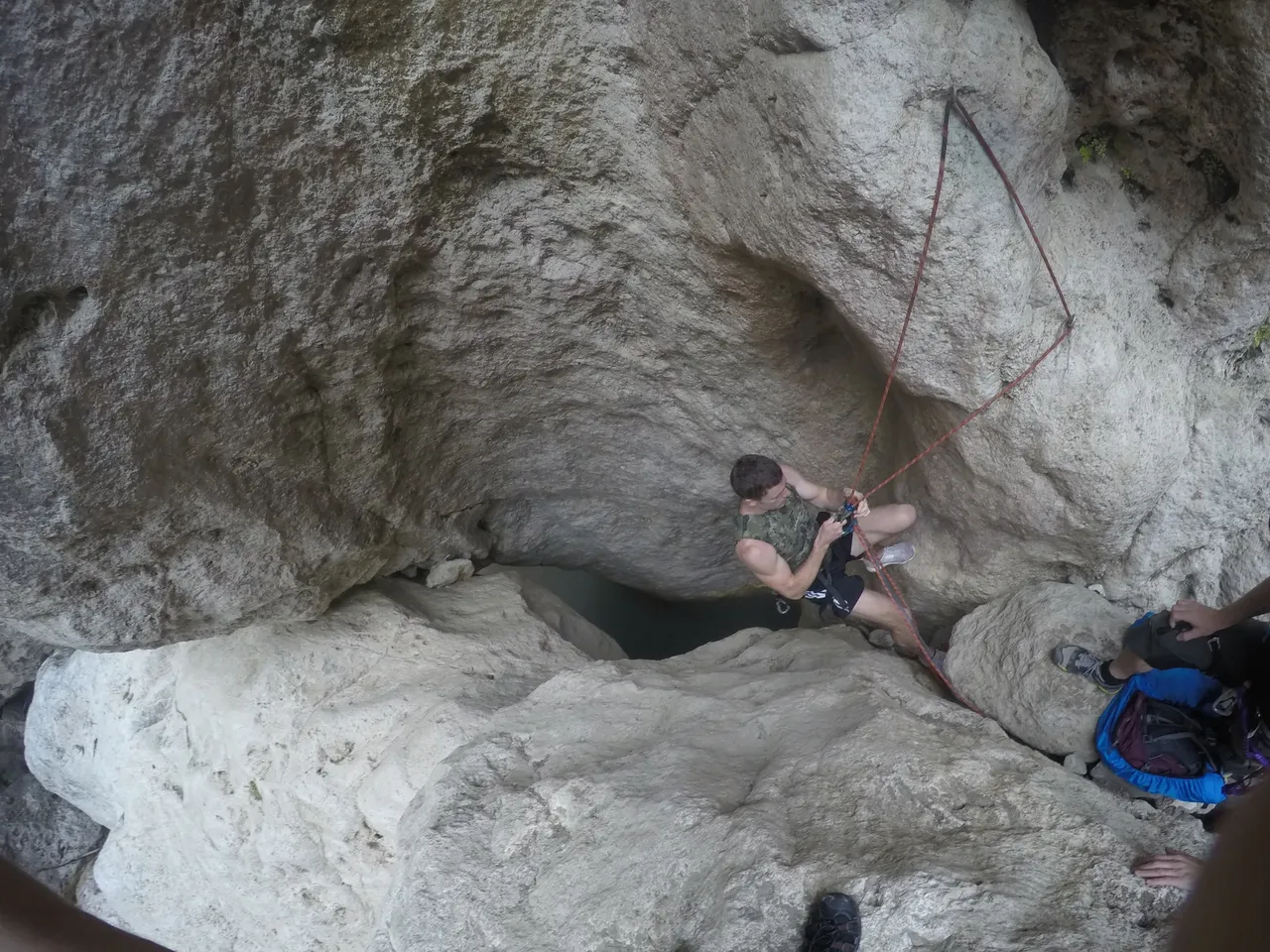
Regional development is by no means complete. The Bolting Antalya website includes reports of a new sector in Çitdibi and of rebolting and maintenance work on existing routes in Olympos and Geyikbayırı. Another post explicitly mentions the beginning of 2026. However, in the retrieved view, the embedded reports on Çitdibi do not carry a clearly attributable publication date. We cannot infer a current opening date or a completed status from this.
Çitdibi itself is described in the regional specialist overview as a more demanding area with steeply overhanging lines. It belongs in the wider regional picture for experienced climbers. When considering new possibilities, however, it is particularly interesting that active route development and maintenance are considered together there.
For a new municipal climbing project in Kemer with a published timetable and confirmed approval, we found no reliable evidence in the sources we checked. Our own idea is therefore explicitly still at the beginning. We want to gather experience, bring contacts together and discuss with the municipality what might make sense. This does not announce a finished climbing park or approved new routes.
Sources: Bolting Antalya: updates and new sectors · Climb Europe: overview of regional climbing guides
What could help Kemer move forward
In our view, the first step would be a joint stocktake. Local climbers, route developers and providers often know things that are missing online: commonly used names, old lines, changed approaches or questions of ownership. Bringing this information together in a small, well-maintained directory could already help guests before a single new bolt is placed.
After that, choices need to be made. Which areas are suitable for more visitors at all? Where must nature, local residents or established climbing traditions take priority? Where would maintaining existing routes make more sense than expanding? In their guide published in 2025, the UIAA and the German Alpine Club explicitly address nature conservation and climbing ethics as well. For a hotel initiative, this means that technical and local decisions belong in experienced hands.
Any possible small pilot project should begin only once consent, responsibilities and professional suitability have been clarified. This includes transparent documentation, a named contact for condition reports and the question of who will take care of things later on. An opening day can be organised quickly; the long-term effort starts afterwards.
Erendiz can contribute even without developing routes. We can gather guests’ questions, make differing levels of information visible, and use our contacts with the municipality to start a conversation. The next sensible improvements, in our view, would be clear information on getting there and the approach, reliable contacts for beginners, and an exchange about the off-season. Whether this leads to joint initiatives, support with maintenance or a local meeting should be decided together with those involved.
In his report on Bolting Antalya, Öztürk Kayıkçı describes how important voluntary work, transparent use of materials and regular support are. For us, that is a better benchmark than simply creating the highest possible number of new routes. An initiative will have succeeded when guests can find their way more easily, local specialists are involved and the crags are used respectfully over the long term.
Sources: UIAA and DAV: guide to bolts, 22 May 2025 · Öztürk Kayıkçı: To Bolt Or Not To Be · Bolting Antalya: getting involved and route maintenance
Contribute your experience
Do you have experience in route development or rebolting climbing routes? Do you know Karataş, Çalıştepe or a sector in the canyon through your own work? Then we would like to get to know you. Tips on existing topos, regional contacts or documented restrictions are equally welcome. Good information can be just as helpful as practical involvement.
Please write to tell us what experience you bring, which areas you know and when you will be in Kemer. For now, we are gathering interest and information. Together with local specialists, we would like to develop a realistic next step from this. Any new bolting work requires the necessary consent, agreed responsibilities and professional assessment; this call is not permission to establish routes independently.
Florian brings his personal enthusiasm for climbing, Erendiz provides a place for conversations, and we contribute our local contacts. Whatever grows from this should suit Kemer. To begin with, we are delighted to hear from people who ask questions, share knowledge and want to take a careful look together.