New hair, new patience: Florian’s personal story
A small image on a video call, a different view of yourself: hair can be a surprisingly personal subject. I’m Florian, owner of the Erendiz Garden Hotel. Recently, I decided to have a hair transplant. Here I explain why—and what you should know before making a trip like this.
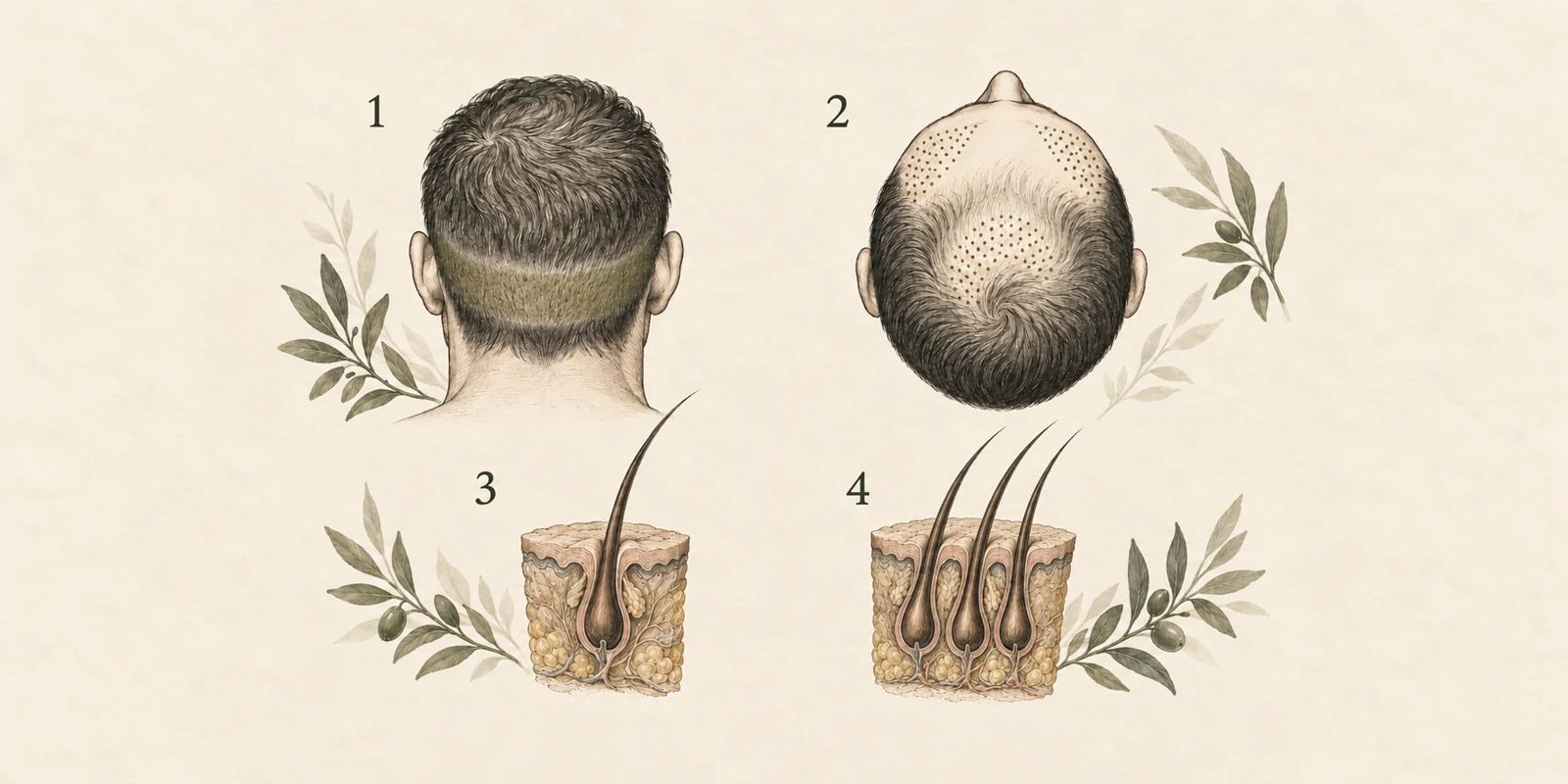
AI-generated illustration. Our own schematic illustration: possible donor and recipient areas, not an individual treatment plan. Our own schematic illustration: one graft is not the same as one hair. The drawing does not show Florian’s treatment.
1 · Donor area | 2 · Recipient areas | 3 · One follicular unit | 4 · Different numbers of hairs
Florian · Owner of the Erendiz Garden Hotel
More than a question of hairstyle
If you’ve ever noticed yourself in the little self-view tile during a WhatsApp video call, you may recognise the moment: you’re listening and, almost by accident, see yourself from an angle your bathroom mirror doesn’t show. A camera can make your forehead look surprisingly large. It’s an image that captures just how personal the subject of hair can become.
In my case, it was a receding hairline at the temples and a bald patch at the back of my head. That’s why I recently had a hair transplant. I’m very happy with my progress so far. This is my personal experience at this stage, not a final assessment of the result or a recommendation for a particular treatment.
I can speak about my own procedure from experience. The medical explanations in this article, however, come from the professional sources linked below. The right treatment for someone else must be determined through an individual medical consultation.
I’m very happy with my progress so far. The final result still needs time.

What happens during a hair transplant
A hair transplant redistributes existing hair. Hair follicles are taken from a suitable donor area, often at the back or sides of the head, and placed in the planned recipient areas. Existing follicles are relocated; donor reserves are limited. The available reserve is therefore as much a part of planning as the desired hairline.
FUE involves removing individual follicular units. In FUT, a strip of hair-bearing skin is removed and divided into grafts. Both methods are surgical procedures and can leave scars. FUE does not automatically mean scar-free.
2,000 or 3,000 grafts does not mean 2,000 or 3,000 hairs
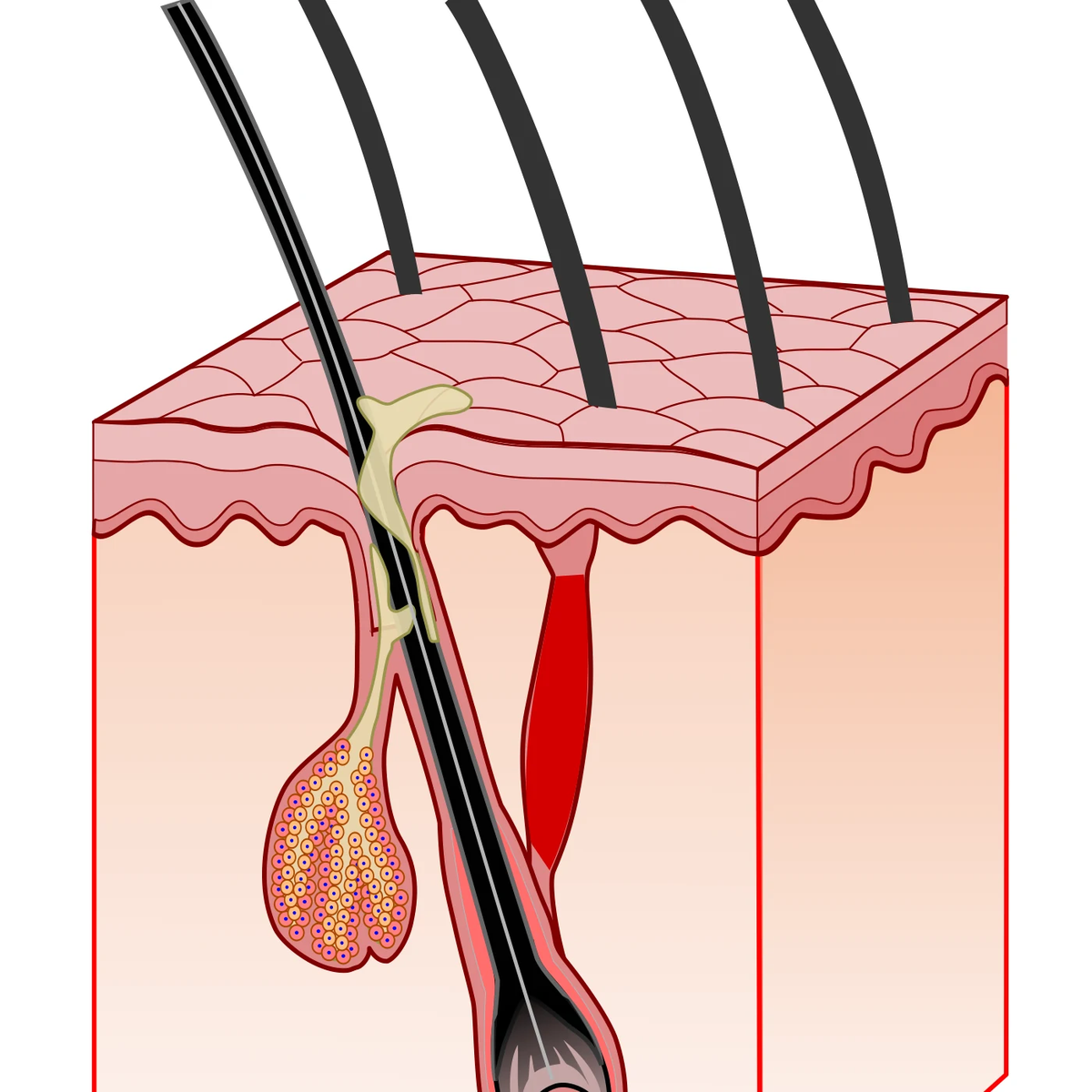
A graft is a transplanted piece of tissue. A follicular unit typically contains one to four hairs. Grafts and hairs are therefore not interchangeable, and there is no fixed conversion factor that applies to everyone.
The figures of 2,000 or 3,000 grafts are examples only. They are not details of my treatment or a recommendation for a particular bald area. Hair characteristics, the donor area, the area to be treated and the future progression of hair loss all belong in an individual medical assessment. A sound decision begins with that assessment, not with the largest number in an offer.
The first few days: a plan, not a rule of thumb
After the procedure, everyday routines need attention. Ask your treating clinic for written instructions explaining when the first hair wash should take place, which products to use and how to wash. An online guide cannot replace the instructions for your own procedure.
The frequently mentioned ten days should not be taken as a promise: a ten-day stay is a travel arrangement, not a universal deadline for complete healing. Check-ups, hair washing and further care need to fit your actual recovery. Do not pick off scabs yourself; if you are unsure, ask the clinic rather than judging your progress against pictures online.
Before travelling, establish who you can contact with questions and how a check-up will be arranged. Severe pain or unexpected symptoms should be reported promptly to the treating clinic. Bleeding, infection, reactions to anaesthetics, scarring and poor graft growth are possible risks of the procedure.
Results develop over months
The initial healing phase and subsequent hair growth are two different timelines. Transplanted hairs may fall out before new hair starts growing. The American Academy of Dermatology describes this temporary shedding as often occurring between two and eight weeks after the procedure.
The AAD says visible results often take six to nine months, and sometimes twelve. The UK’s NHS gives ten to eighteen months for the full result. These are indicative timeframes from different sources, not a guarantee or a personal schedule. My satisfaction so far is therefore exactly that: how I feel at this stage.
Kemer: plan this stay differently
If you are travelling for a procedure, you should not simply fit it into a normal beach holiday. Sun exposure, swimming, exercise and your journey home need to be discussed with the treating clinic. A hotel pool and inviting mountains do not amount to medical clearance for those activities.
You can enquire about accommodation at Erendiz in Kemer. I now understand the subject from personal experience too. Our hotel remains a hotel: diagnosis, treatment, hair washing as a medical service and follow-up examinations are the responsibility of the treating medical practice. Medical aftercare is not offered here.
Arrange your clinic appointments and the medically recommended travel schedule before deciding how long to stay at the hotel. You can then make practical plans for a companion and travel to the clinic you have actually chosen.

Questions to put on your list
Who is the treating doctor, what licensing and experience can be verified, and who carries out each part of the procedure? How are suitability, donor reserves and expectations assessed? What is included in the written treatment price?
What follow-up examinations are planned, who can be contacted if problems arise, and what happens after you return home? What restrictions apply to washing, sun exposure, exercise and swimming? When is it medically appropriate to travel home? Also clarify which insurance benefits actually apply.
Treatment is a personal decision. Take time to ask these questions. My story is intended to open an honest conversation and explain the terminology—not to make a medical decision for you.
A personal account with researched background information. This is not individual medical advice or an offer of clinic referral services.
